 How-to
How to Fix Loose Door Hinges: A Step-by-Step Repair Guide
Last Updated: November 17, 2026
Quick Summary
To fix loose door hinges, first tighten the screws, then replace short jamb screws with 3-inch wood screws that reach the framing stud behind the jamb. If a screw spins freely in stripped wood, stop turning it and repair the hole with toothpicks, a dowel, or a threaded insert before reinstalling the screw.
- Check whether the screws, the wood, or the hinge itself is the cause before starting any repair.
- Builders often use short screws about 3/4 inch that grip only the thin door jamb.
- For stripped holes, pack the hole with toothpicks and glue, then drive the screw back in.
- On frame-side repairs, remove one screw at a time so the door stays hung.
- Replace the hinge when knuckles are worn, the leaf is bent, or the pin will not stay seated after two attempts.
Table of Contents
- Diagnose the Cause Before You Fix Loose Door Hinges
- Tools and Materials You'll Need
- How to Fix Loose Door Hinge Screws
- How to Fix Door Hinge Holes That Are Too Big
- How to Fix a Loose Door Hinge on a Frame
- What to Do About a Loose Door Hinge Pin
- Frequently Asked Questions
Diagnose the Cause Before You Fix Loose Door Hinges
Loose door hinges are not one problem. They are three problems wearing the same costume, and the fix depends on which one you have. Checking the cause before touching a screwdriver matters, because tightening the wrong part wastes time and the door keeps sagging.
Most guides skip this step and jump straight to "tighten the screws." But a loose hinge is a symptom, not a diagnosis.
Is It the Screws, the Wood, or the Hinge Itself?
A quick three-part check tells you which repair you need. Open the door and look at the hinge screws on the jamb side. Then:
- Screw turns but won't hold: the screw hole is stripped. The wood threads are gone.
- Screw bites and tightens: the screws were simply loose. Tighten them and recheck.
- Screw head sits proud or the hinge plate wiggles: the hinge leaf or pin is worn.
The Wood Handbook from the U.S. Forest Service explains that wood holds a screw through the friction of its threads against the fibers. Once those fibers break down, no amount of tightening brings the grip back.
If the repair looks like part of ongoing upkeep rather than a one-time fix, our maintenance service covers routine repairs like this.
Tools and Materials You'll Need
Gather everything before you start so the door is not hanging open while you hunt for a drill bit:
- Screwdriver that matches your screw heads, usually Phillips #2
- Cordless drill with a driver bit
- Wood screws, size #9 or #10, about 3 inches long
A threaded insert kit is an option if you want a permanent repair. It gives the screw metal threads to bite into instead of wood.
How to Fix Loose Door Hinge Screws
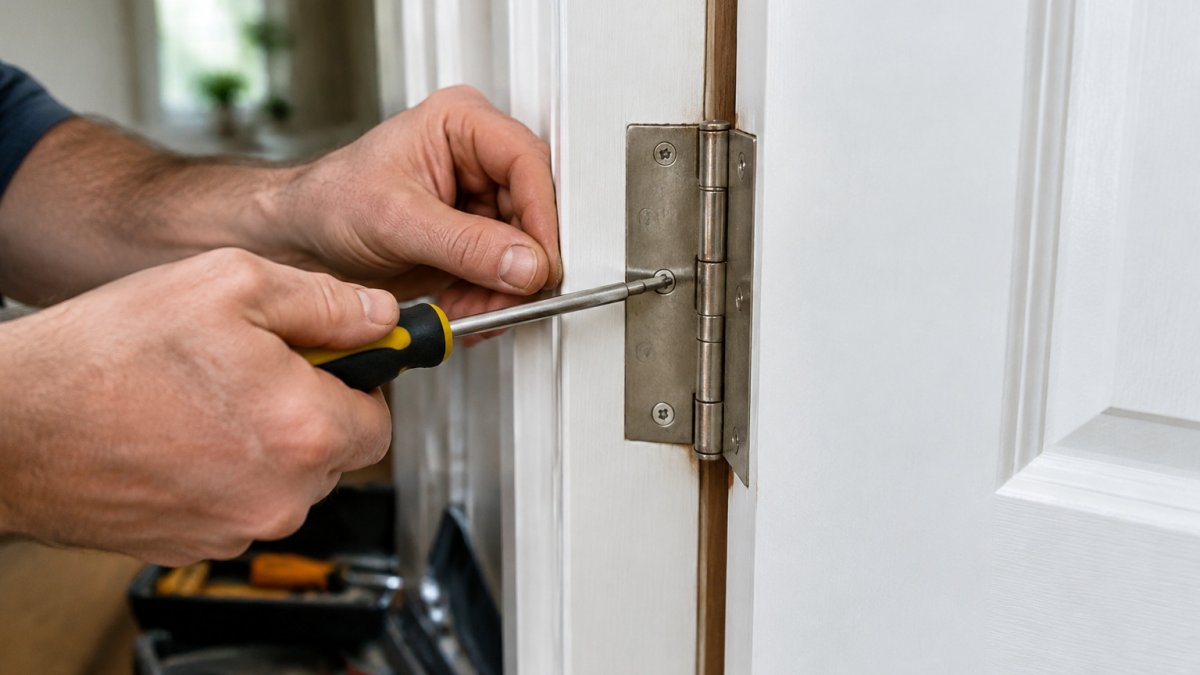
The fix for loose door hinge screws is to tighten them first, then swap short screws for longer ones that reach solid framing. Turn each screw clockwise until it stops, then test the door. If the hinge holds, you are done in under a minute.
If the screw spins freely, stop. Do not keep turning it. You are grinding the hole wider. Move to the repair steps below.
Tighten First, Then Replace Short Screws
Builders often use short screws, about 3/4 inch, that grip only the thin door jamb. A longer wood screw reaches the framing stud behind the jamb and holds far better.
Here is the sequence:
- Remove one short screw at a time.
- Drive a 3-inch wood screw into the same hole.
- Angle it slightly toward the stud if the jamb is thin.
- Tighten until snug, not until the head sinks into the wood.
- Test the door swing before moving to the next screw.
Most jamb screws are covered by a thin layer of paint or caulk. Score around the head with a utility knife first so the paint does not chip.
How to Fix Door Hinge Holes That Are Too Big
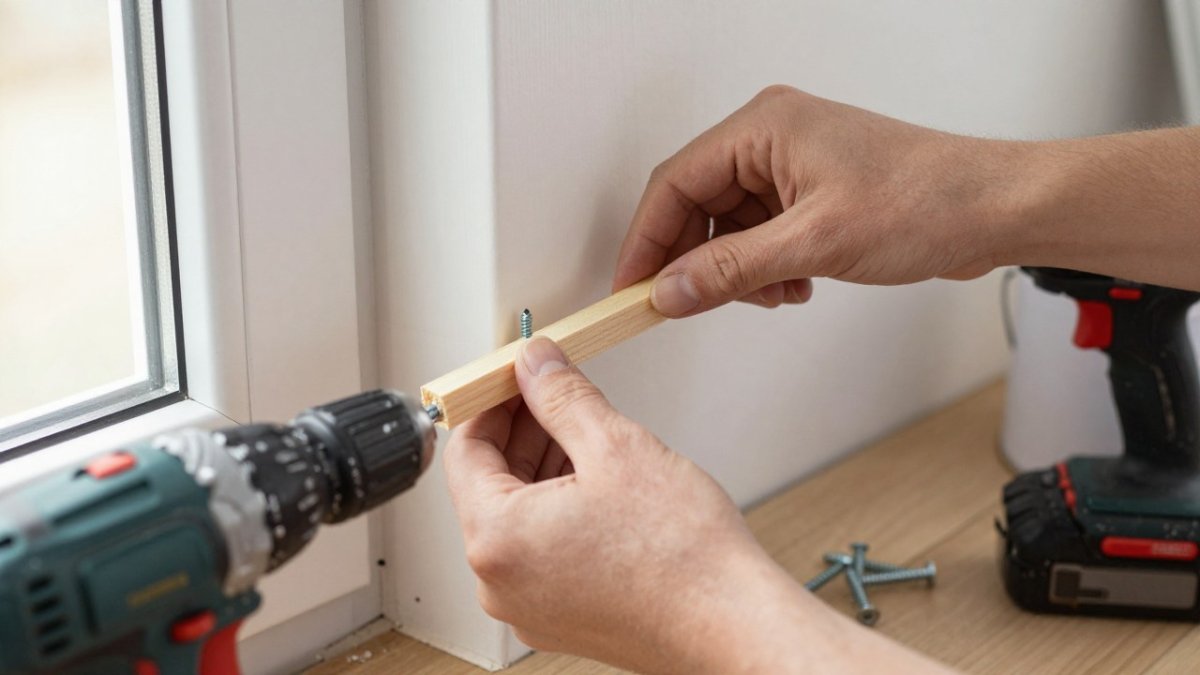
A stripped screw hole needs new material for the screw to grip. The fastest fix is to pack the hole with toothpicks and glue, then drive the screw back in. A dowel is the sturdier version of the same idea.
Compare Your Repair Options: Toothpicks, Dowels, and Threaded Inserts
Each method trades speed for durability. Pick based on how much traffic the door sees.
| Method | Difficulty | Durability | Best For |
|---|---|---|---|
| Toothpicks and glue | Easy | Short term | Quick fix on a light-use door |
| Wooden dowel and glue | Medium | Long term | Doors that get daily use |
| Threaded insert | Medium | Permanent | Heavy doors and metal hinges |
Toothpick method: Fill the hole with wood glue, pack in toothpicks until snug, snap them flush, and let the glue dry.
Dowel method: Drill the hole out to 3/8 inch, cut a dowel rod to length, coat it in wood glue, tap it in, and let it cure. Then drill a pilot hole and reinstall the hinge.
Threaded insert method: Drill a larger hole, thread in the insert, and the screw now bites into metal.
Our carpentry team handles stripped holes and frame reinforcement when the damage runs deeper than a simple plug fix.
How to Fix a Loose Door Hinge on a Frame
A loose hinge on the frame side is a different animal from a loose hinge on the door side. The screws here go into the jamb, and behind that jamb sits a hollow gap before the framing stud. If the jamb wood is split or soft, tightening will not save it.
Diagnose the Frame-Side Failure First
Run this check before any repair, because the wrong fix here is how a small job becomes a big one:
- Screw spins and the jamb wood looks crumbly: the jamb itself is stripped. Go to the hole-repair methods above, then return here.
- Screw tightens but the whole jamb flexes when you pull the door: the jamb is loose from the framing, not the screw from the jamb. A longer screw alone will not fix this.
- Screw tightens and the jamb is solid, but the door still sags: the hinge leaf is bent or the knuckles are worn. See the hinge-pin section below.
A common pattern is a jamb that was shimmed at installation and never fastened through the shims. The hinge screws grip the jamb, the jamb grips nothing, and the door slowly drops. Open the door partway and push the jamb edge with your thumb; movement means the jamb needs fastening, not just longer hinge screws.
Match the Repair to the Door Type
Door construction changes which frame-side fix is safe:
- Solid-core and solid-wood doors: a 3-inch screw through the jamb into the stud is the standard repair and holds well.
- Hollow-core doors: the door-side leaf has almost no material to grip. Keep longer screws on the jamb side only, and use the dowel or threaded-insert method on the door side rather than driving a long screw through the hollow core.
- Exterior doors: these are heavier and see weather movement. A longer screw that reaches the stud is appropriate, but check that the jamb is not rotted first; a screw into soft, wet wood will pull out again within a season. Probe the jamb with an awl before you commit.
Watch out: on an exterior door, a screw driven at a steep angle toward the stud can miss and exit the exterior face of the jamb, damaging trim or siding. Drill a small pilot hole first and confirm you are hitting solid wood.
The Frame-Side Repair Sequence
Once you have confirmed the jamb is sound and the screw holes are the problem:
- Support the door with a wedge or a helper so the hinge is not carrying the full weight while screws are out.
- Remove one screw at a time so the door stays hung.
- If the hole is stripped, repair it with the dowel or threaded-insert method before reinstalling.
- Drive a 3-inch wood screw into the same hole, angled slightly toward the stud if the jamb is thin.
- Tighten until snug, not until the head sinks into the wood.
- Test the door swing before moving to the next screw.
If the jamb is split, fill the split with wood glue and clamp it, or replace that section of jamb. If the old holes are beyond repair, moving the hinge up or down an inch puts the screws into fresh wood, but only if the door has enough clearance at the top or bottom.
If the frame repair looks beyond a DIY job, our guide on how to find reliable handymen walks through what to check before you hire. You can also contact us to request help with a tricky frame repair.
What to Do About a Loose Door Hinge Pin
A loose door hinge pin is often the easiest fix of the three, but it is also the most misdiagnosed. The pin is the rod that runs through the hinge knuckles. If it works its way up and out, the door drops and starts rubbing the frame. The trap is assuming a rising pin is the whole problem when it is usually a symptom of worn knuckles or a door that is out of alignment.
Tell a Loose Pin From a Worn Hinge
Open the door halfway and wiggle it up and down while watching the hinge:
- The pin rises but the knuckles are tight: the pin is simply walking out. Tap it back down and check whether it stays.
- The door moves vertically at the hinge, and the pin stays put: the knuckles are worn and the pin no longer grips. Replacement is the durable fix.
- The hinge leaf rocks against the jamb or door: the leaf is bent or the screws are loose. Fix the screws first; a bent leaf will keep working the pin loose.
A quick test for a bent hinge: close the door and look down the hinge line. A leaf that does not sit flat against the jamb, or a knuckle visibly out of line with its neighbors, points to a bent hinge rather than a loose pin.
Seat the Pin, Then Verify
Tap the pin back down with a hammer and a nail set, working from the bottom so you do not mushroom the top of the pin. Open and close the door several times and watch the pin.
Watch out: hammering directly on the pin head can peen it and make future removal difficult. Use a nail set or a scrap block of wood between the hammer and the pin.
When to Replace the Hinge
Replace rather than repair when the knuckles are worn, the leaf is bent, or the pin will not stay seated after two attempts. Match the replacement to the original: same leaf size, same screw hole pattern, and the same number of knuckles. On exterior doors, use a hinge rated for exterior use so it does not corrode and seize.
For safety, always support the door with a wedge before you remove any hinge. A hinge that is failing is a job for professional installation rather than a pin fix.
Loose door hinges rarely fix themselves, and a stripped hole only gets wider with each attempt. Procraft Renovation handles door installation, carpentry repair, and home maintenance so the fix holds the first time.
Frequently Asked Questions
How do you fix loose door hinge screws that keep backing out?
Start by tightening the existing screws with a screwdriver that fits the head snugly. If they spin without gripping, the hole is likely stripped. Replace the short factory screws with longer wood screws that reach into the stud behind the jamb. If the hole is enlarged, fill it with wood glue and toothpicks or a dowel, let it cure, then drive the screw again. A screw that keeps backing out usually means the threads have nothing solid left to bite into.
Can you fix a loose door hinge without removing the door?
In many cases, yes. If the screws are loose but the holes are intact, you can tighten or replace them with the door still hanging. Support the door with a wedge or have someone hold it steady to take weight off the hinge while you work. Removing the door is only necessary when you need to repair a badly damaged hole, replace the hinge itself, or access the jamb for a dowel repair.
What should you do if a door hinge pin is loose?
A loose hinge pin usually means the knuckles have worn or the pin has worked its way up. Tap the pin back down with a hammer and a nail set, or replace it with a slightly larger pin if the knuckle is worn. If the pin keeps rising, a few drops of thread-locking compound on the pin can help it stay seated. Check that the hinge leaves are tight to the jamb and door before blaming the pin.
How do you repair door hinge holes that are too big?
The most durable fix is to drill the hole clean, glue in a hardwood dowel slightly larger than the hole, let it dry, then drill a new pilot hole and reinstall the screw. Toothpicks and wood glue work for a quick fix on light doors. For heavy doors or repeated failures, a threaded insert gives the screw fresh threads to grip. Always match the repair to the door's weight and how often it swings.